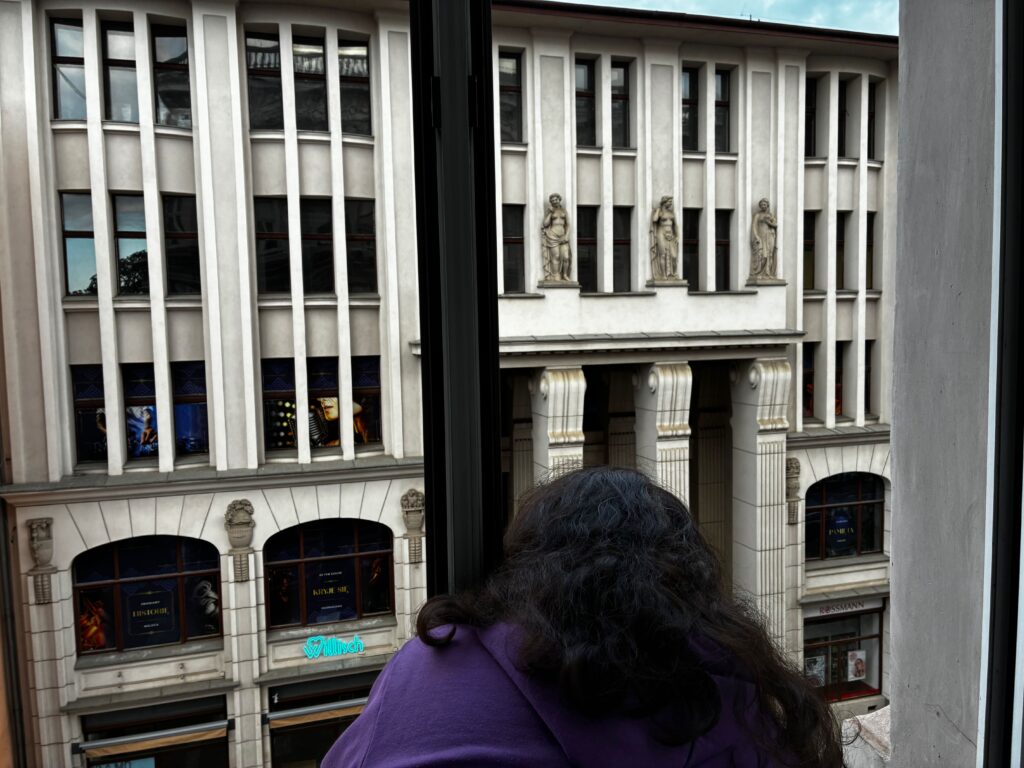
We are travelling around Poland in our car, visiting the department stores owned by the Conitzer family. Our first stop is Bydgoszcz, where there was once a department store belonging to M. Conitzer & Söhne. We have booked a room in the hotel across the street. As soon as we arrive in our room, we rush to the window and gaze at the building opposite.
My wife leans out of the window. She takes another photo from a different angle. She is a perfectionist when it comes to photography. “That’s not true,” she says. “I just want to take good photos.” “That’s exactly what I’m saying,” I reply. We stand there in amazement in our room at the Focus Hotel in Bydgoszcz. The former M. Conitzer & Söhne department store is right across the street. We point out our discoveries to each other. So many details can be made out. It is almost like those moments when the living room door opened and the presents beneath the Christmas tree came into view.
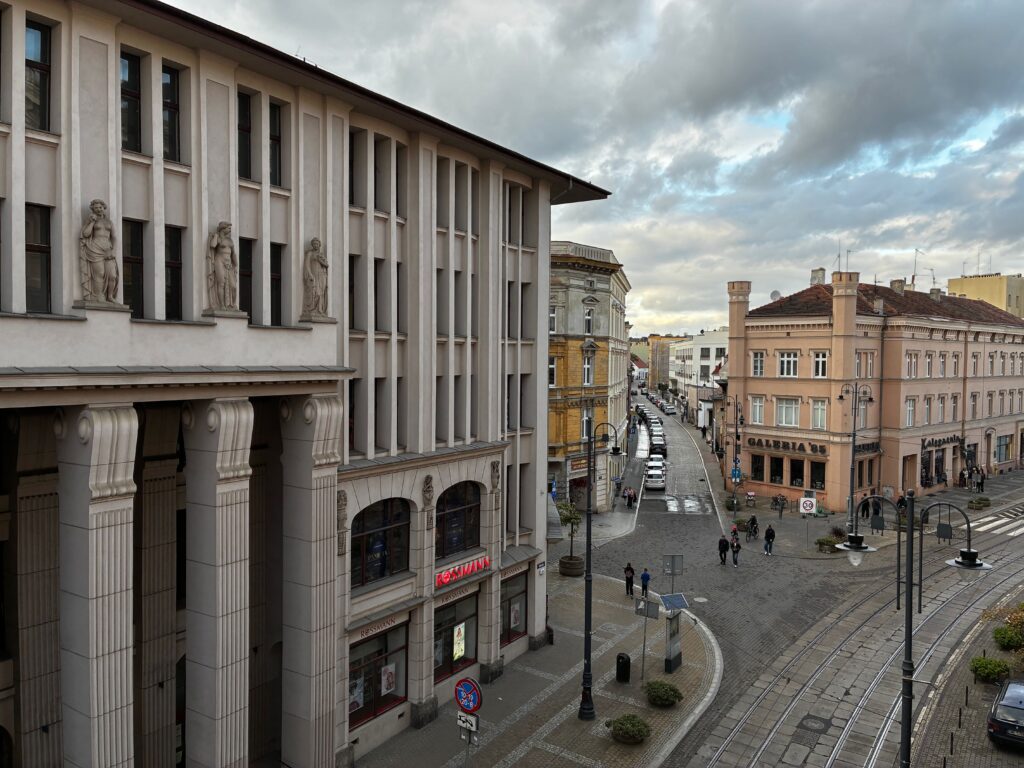
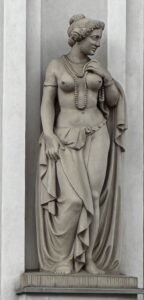
Our eyes are first drawn to the depictions of the goddesses of antiquity directly above the entrance. There are four of them: Aphrodite, Eris, Athena and Hera . They can be clearly identified in the following photographs.
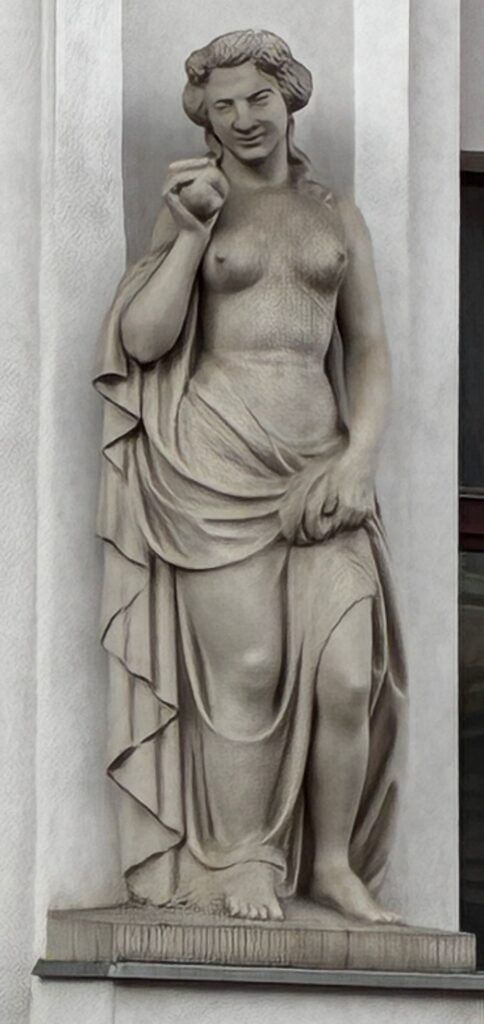
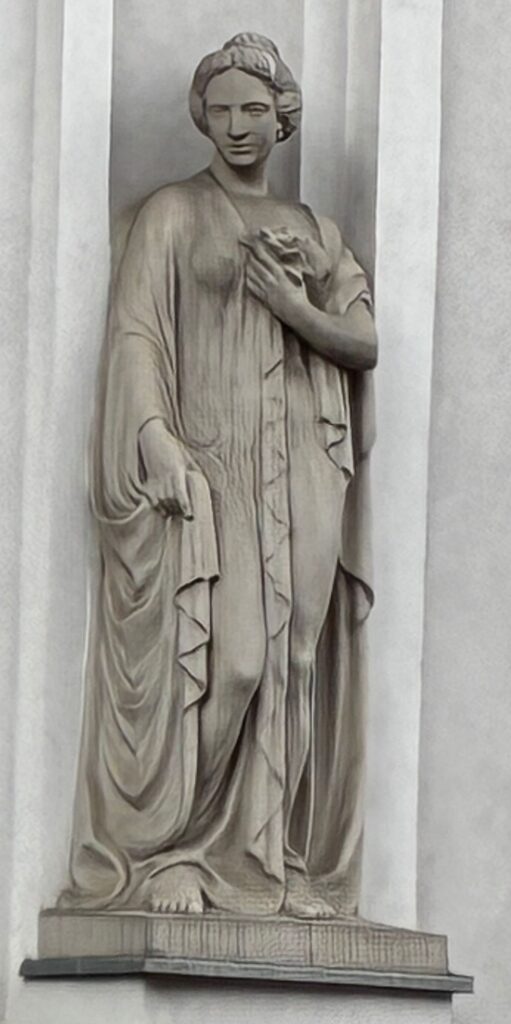
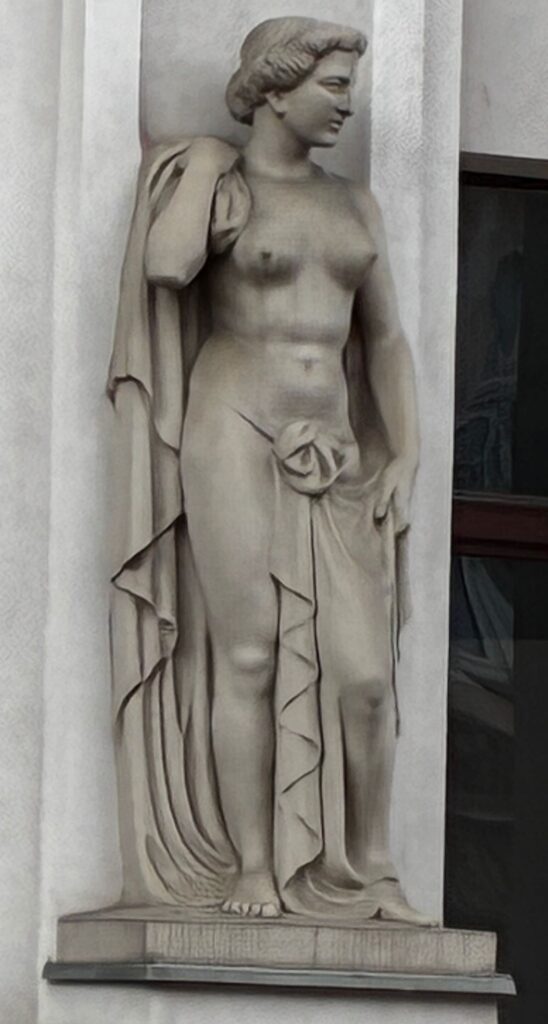
The department store was built in 1910 by Berlin architect Otto Walter. It was financed by Rudolf, Alexander and Nathan Conitzer. The design was inspired by the Wertheim family’s department stores in Berlin and Stralsund. On 4 October 1911, the store opened its doors to customers. Crowds flocked to the modern establishment and marvelled at its interior architecture. Glass elements had been installed in the ceiling, allowing daylight to illuminate the sales area. An elevator connected the four floors. Impressive staircases led to the upper levels. Otherwise, the interior was furnished simply and functionally, so that the merchandise, rather than the department store itself, would take centre stage. The entrance, adorned with numerous goddesses, announced that visitors were entering a temple of consumerism. The ground floor sold silk, linen and cotton goods, clothing, aprons, wool, gloves, stockings, umbrellas and lace. Hats, shoes, and clothing for children and men were found on the first floor. The second floor was dedicated to girls and women. The display windows showcased dresses, blouses, skirts and corsets. On the third floor, the department store offered carpets, curtains, upholstery fabrics, linoleum, leather and bed linen. The fourth floor housed the workrooms and workshops of the tailors and dressmakers .
We have found an old photograph in the hotel. It hangs on the wall in a room further down the corridor. It shows the department store when it was still called M. Conitzer & Söhne. The sign beneath the four goddesses is clearly visible.
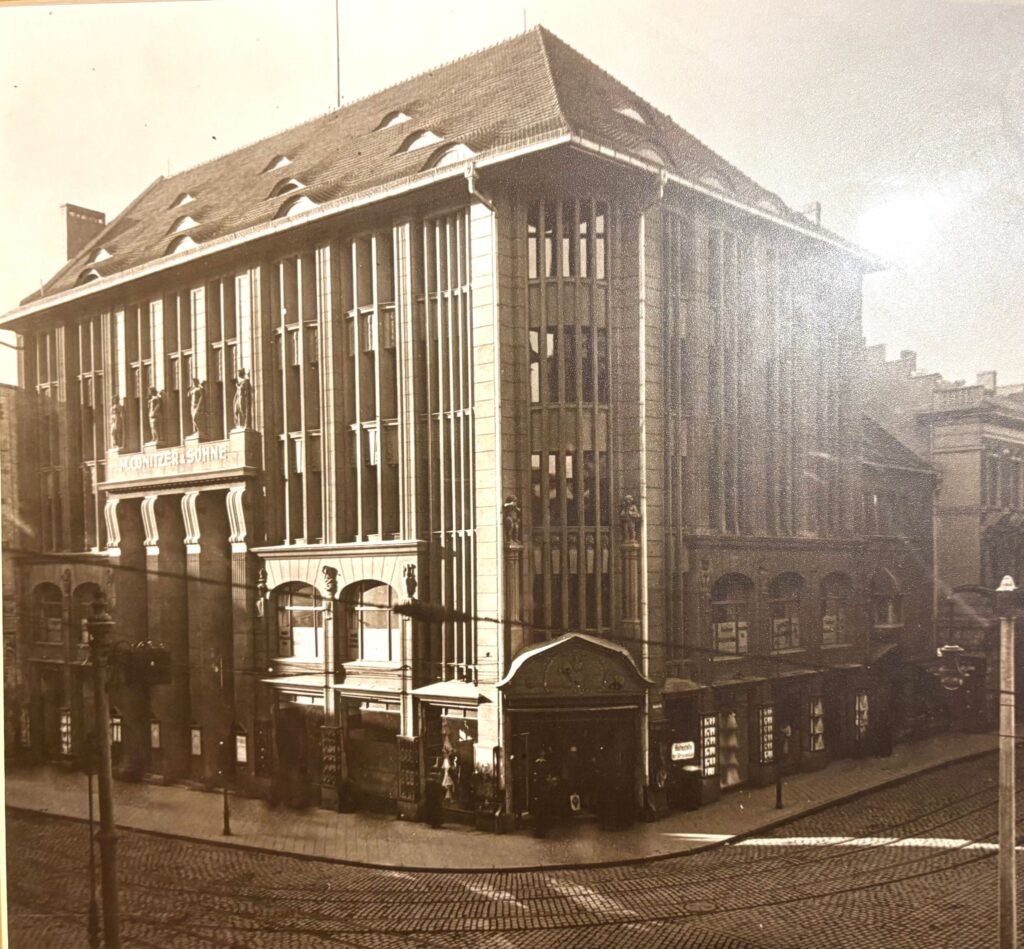
The woman at reception also tells us that there used to be a nightclub in the department store some time ago, but it has since closed again. She is glad about this, as many hotel guests had complained about the noise at night. Without the nightclub, we sleep very well. In the morning, the tram wakes us pleasantly. She also tells us that in Bydgoszcz the department store is known as “Jedynak”. It was once a shopping centre with many small shops. We thank her for the information and head to the bar for one last drink.
On the bar table, I find a note telling the history of our hotel. It used to be called “The Eagle” (“Zum Adler”) and opened in 1896, fourteen years before the foundation stone of the department store was laid. I am convinced that Rudolf, Alexander or Nathan Conitzer must have met here in the bar. I picture the brothers discussing the architect’s plans spread out across the table. Later, they would probably have gone over the invoices while, across the street, workers carried wheelbarrow after wheelbarrow of building materials into the construction site. “It’s going to be a sensation!” Rudolf must have exclaimed. We can still feel that enthusiasm as we look at the building. Its imposing presence exerts a force that is difficult to resist. Of course, it has lost some of its appeal. It is beginning to show its age, and the Rossmann store does not exactly take our breath away either. Even so, from our room across the street, we can still sense the enthusiasm of the Conitzer brothers.
The Conitzer brothers ran the department store until early 1922. After that, the establishment changed hands several times and was known as “Chudzinski & Maciejekski”, later as “Be-De-Te”, and then as DTC “Jedynak” . The building is undergoing further changes today. We have heard that a café is planned for the ground floor. The walls have already been decorated with pictures showing the building’s past. However, there is still a staircase in the middle of the room and boxes everywhere. So it will be some time before the café opens. Unfortunately, we have arrived too early. If anyone visits Bydgoszcz in the coming months, we would love to receive photographs of the interior.
din-1505-2-numeric
default
0
4957
Weitere Geschichten der Familie Conitzer …
-
Department store Paul Conitzer in Duisburg or the enchantment of women
-
Lina Conitzer: Bazaar for Bargain Lots or Women’s Equality
-
Rudolf Conitzer – a founder of the 19th century
-
The „Baarsystem“ or the opening of the first M. Conitzer & Söhne department store in Marienwerder
-
Moses Conitzer and his sons