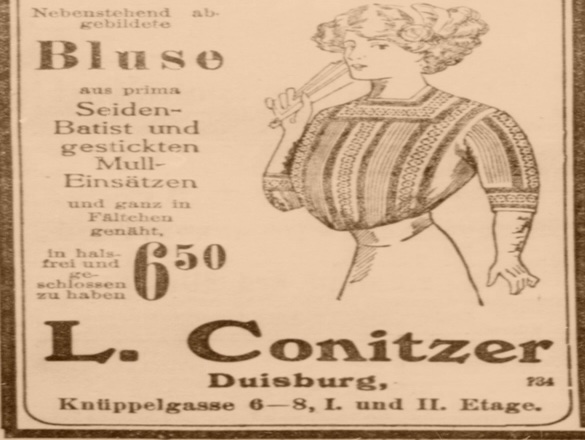
We are sitting at the dining table. My daughter is telling a story. She is dismayed and upset. As always, she laughs while she speaks, and her eyes flash as she narrates. “A girl in my class actually wants to stay at home when she’s married because the man earns more anyway!” She shakes her head in disbelief, her hair flying.
The German Civil Code (Bürgerliches Gesetzbuch, or BGB) was published in 1900 and is still, in parts, the foundation of our law. Paragraph 1356 stated:
§. 1356. The wife is, without prejudice to the provisions of §. 1354 2, entitled and obliged to manage the joint household. The wife is obliged to work in the household and in the business of the husband, insofar as such activity is customary according to the circumstances in which the spouses live.
BGB
Only men worked on the first BGB. “No wonder!” says my daughter. “There were no female lawyers in the German Empire back then,” I reply, hoping that it’s true. The BGB described a family dictatorship and formulated a law out of it. The father had sole custody of the children. After the Second World War, Paragraph 1356 was amended. However, it took until 1958 . “Dad,” my daughter says, “what does all this have to do with the Conitzer family?”. I reply: “Right. Let’s begin.”
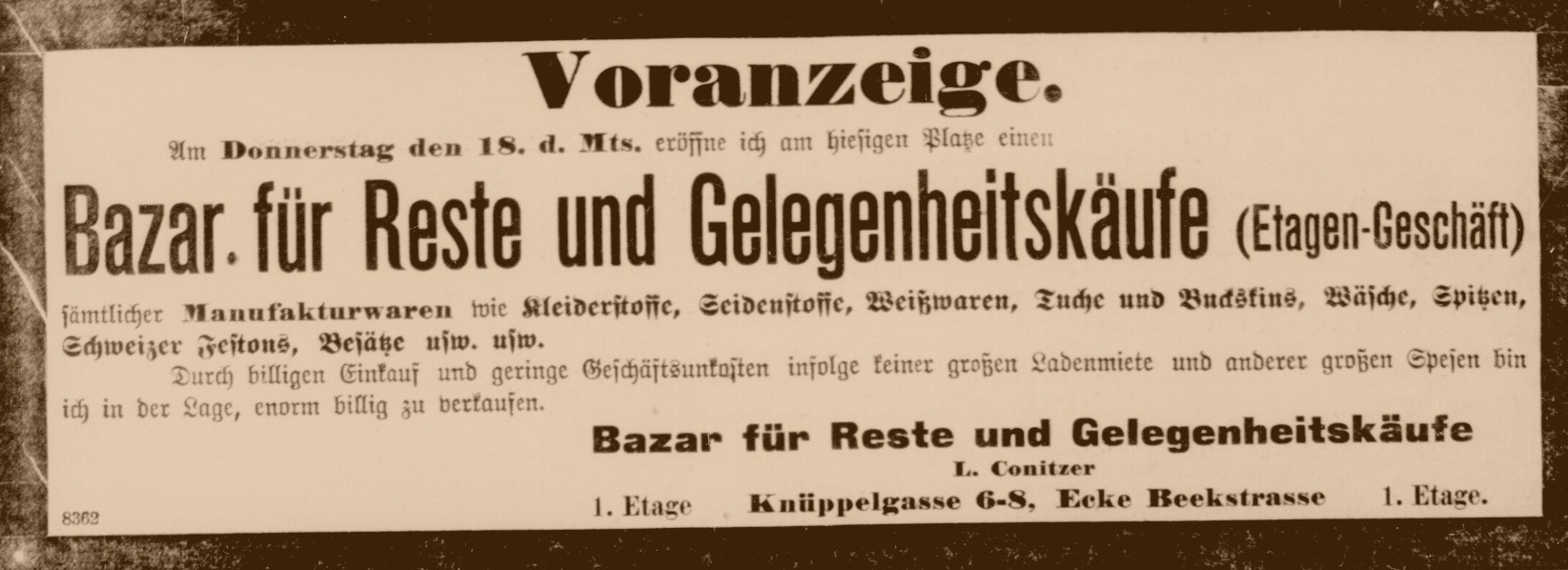
Figure 1: Advance notice of the opening of the L. Conitzer company, see
On January 18, 1906, Lina Conitzer opened her “Bazar für Gelegenheitsposten” (Bazaar for Bargain Lots) on the first floor of a building at Koppelgasse 6-8 in Duisburg. Lina Conitzer, née Preuss, gave the business its name and was the partner. She was married to Paul Conitzer. He held power of attorney (Prokura) in her business.
“Duisburg. In our commercial register A, under number 494, the company ‘Bazar für Gelegenheitsposten Lina Conitzer’ in Duisburg has been entered, and as its owner, the wife of the merchant Paul Conitzer, Lina née Preuß, in Duisburg. Power of attorney has been granted to the merchant Paul Conitzer in Duisburg. Duisburg, January 6, 1906.”
Entry of ‘Bazar für Gelegenheitsposten Lina Conitzer’ into the commercial register, in: Deutscher Reichsanzeiger und Preußischer Staatsanzeiger
My daughter’s eyes are already wandering from me to the door. Nowadays, children’s attention spans are getting shorter and shorter. I say: “Look, even back then it wasn’t so simple in the relationship between man and woman. But with Lina Conitzer, you can see that she also had a say.” My daughter looks at me; I watch her thinking. “Is that really true?” she asks.
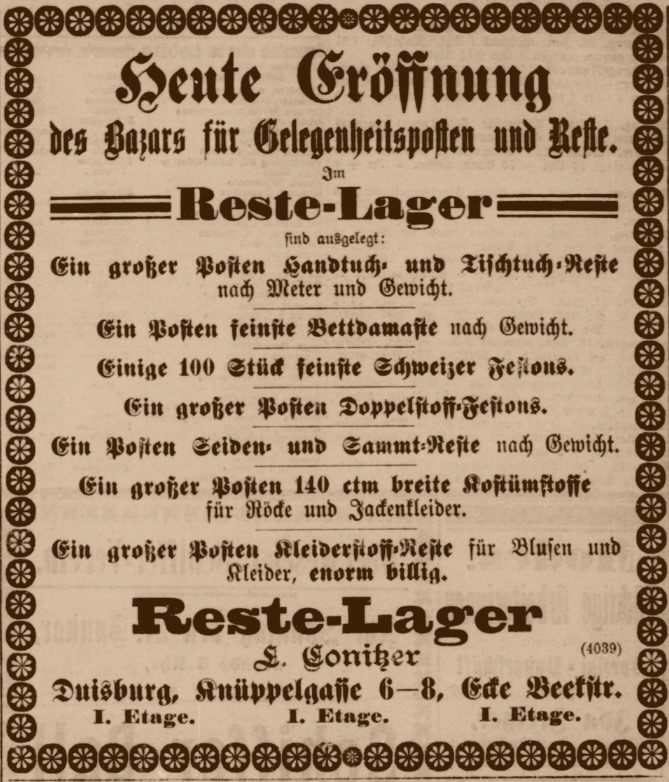
Figure 2: Opening of ‘Bazar für Gelegenheitsposten L. Conitzer’, see
The Bazaar for Bargain Lots collected unfinished products or goods, for example from the purchase of bankruptcy assets, and offered them at very low prices. It was a business that depended on advertisements in the local newspapers, as customers had to be constantly informed about what new goods were available. In Figure 2, for example, silk and tablecloth remnants are offered. In most cases, fabrics (see Figure 3) or unfinished dresses (see Figure 4) were actually offered. Sometimes there were also tea and coffee sets. This business method was apparently successful and eventually led to the opening of a larger shop named Paul Conitzer at Beekstrasse 30-32 .
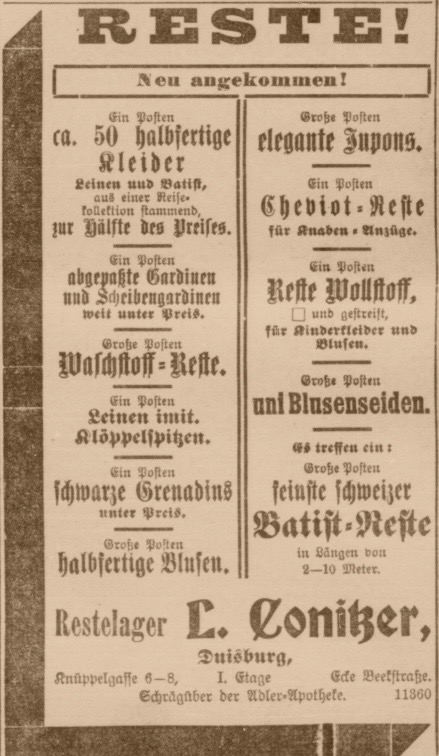
Figure 3: Advertisement for ‘Bazar für Gelegenheitsposten L. Conitzer’, 1906, see
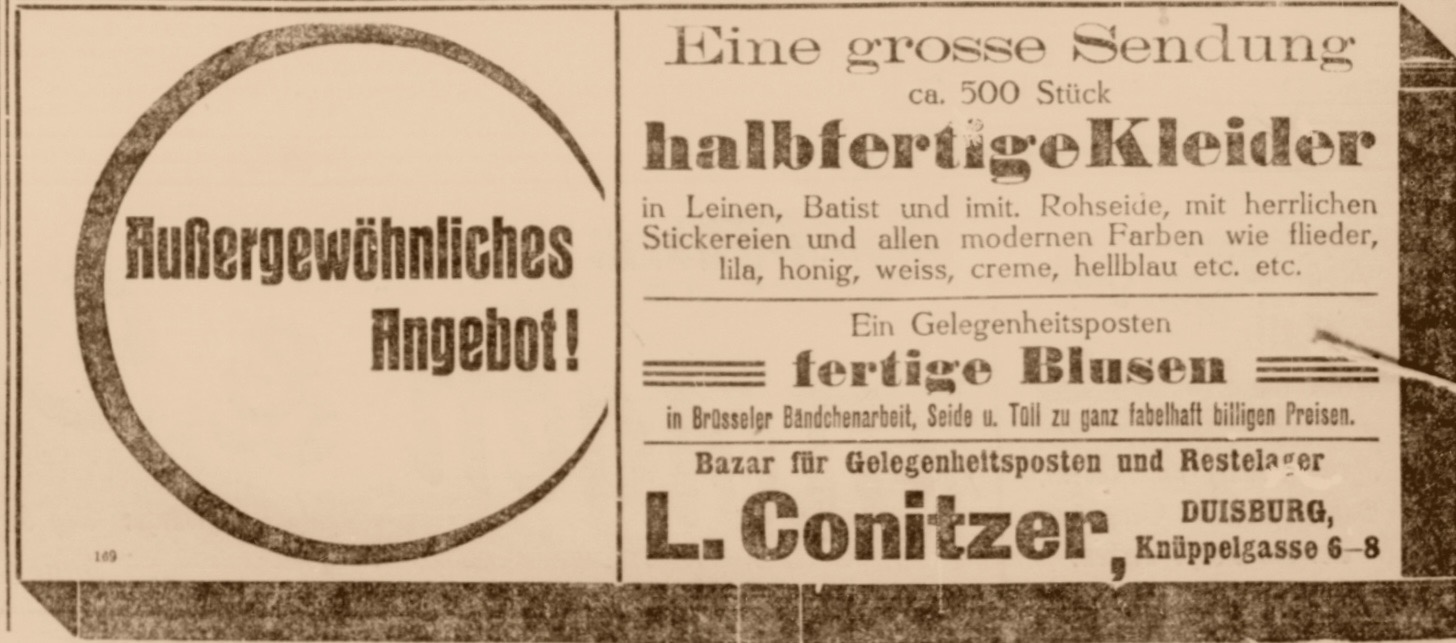
Figure 4: Advertisement for ‘Bazar für Gelegenheitsposten L. Conitzer’, 1910, see
In this case, Paul Conitzer had allowed his wife to open a business with her name as the owner. What sounds very strange today was normal back then: the husband had to give his permission if the wife opened a business. Paul Conitzer had power of attorney, but she was the boss. This behavior stood in contrast to the text of the law in the BGB. Why had Paul and Lina chosen this type of business opening, which was unusual for the time? To explain this, it must be added that the company was transferred to Paul Conitzer in 1912 and the business then bore his name.
“It’s complicated,” I reply to my daughter’s question. I start from further back and try to explain.
Paul Conitzer was born on December 31, 1867, in Jeschewo in West Prussia. His father Oser had a small business in this village. He stood in the shadow of his two older brothers Moses and Alexander, who had founded their businesses previously. Oser had a boarding house and restaurant with a license to distill and a small shop. He was therefore allowed to produce and offer alcohol, see and .
In 1890, at the age of 23, Paul went to Bromberg (Polish: Bydgoszcz). The city is 60 kilometers away from Jeschewo. There he opened a department store with his brother Alexander. At first it had the name “O. Conitzer Söhne” and later “Gebrüder Conitzer”. However, one year later, on December 3, 1891, Alexander and Paul Conitzer had to file for bankruptcy .
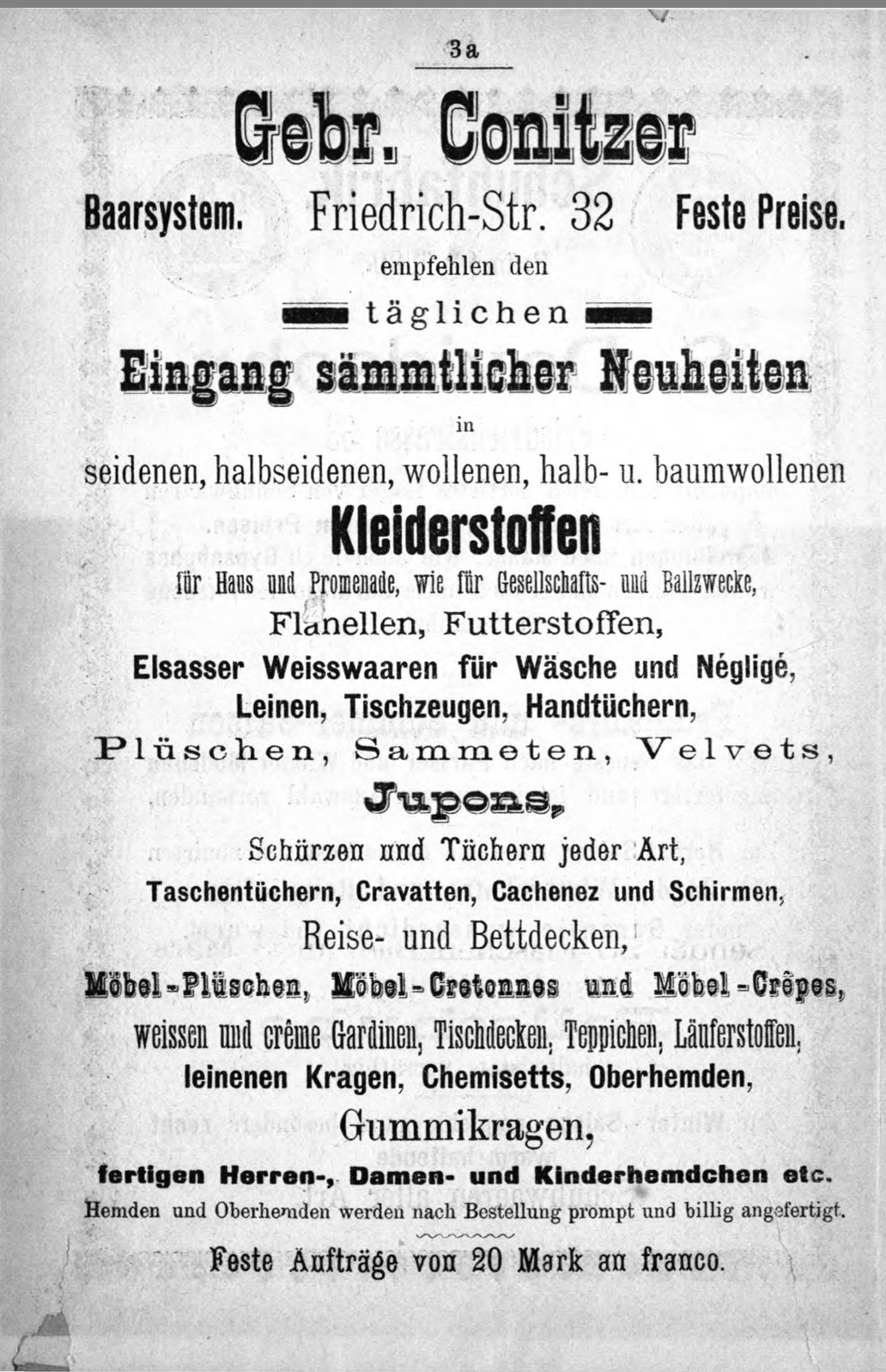
Figure 5: Advertisement for Gebr. Conitzer, see
Afterward, Paul Conitzer tried to set himself up as an independent merchant. Unfortunately, this attempt also ended in bankruptcy on January 17, 1895. So he left Bromberg. On October 15, 1902, he married Lina Preuss in Würzburg and they moved to Duisburg to open the ‘Bazar für Gelegenheitsposten’.
In the German Empire, there were very strict rules in the event of insolvency . Debts did not expire until after 30 years. Before that, creditors had access to the debtor’s assets and income if the debts had not yet been paid. It is conceivable that Paul Conitzer still had debts from the bankruptcies. Therefore, starting his own business was more difficult, as creditors would have immediately demanded access to Paul Conitzer’s earnings. Too much money would have flowed out of the business. In addition, it would have been difficult to get any credit at all to purchase the goods. A simple way to circumvent this problem was to register the business in the name of his wife, who had no debts. Of course, there are other possible explanations. However, the subsequent renaming to Paul Conitzer would then make no sense. It would also be conceivable, for example, that the money for the founding came from the Preuss family, or that the business idea was Lina Conitzer’s.
Unfortunately, there are no clear facts that could explain the reasons. In any case, Lina Conitzer retained power of attorney in the new company , which was registered in her husband’s name in 1912, so that one can speak of a certain equality in the relationship. On July 19, 1903, and September 15, 1906, Lina and Paul’s two sons, Oskar and Harry, were born . In their bazaar and also in the household in Duisburg, several employees were employed. See, as an example, the search for a nanny in Figure 6. There had to be a division of labor between the business and the household. Lina and Paul chose the classic division of labor here. The man ran the business and the woman ran the household with the employees.
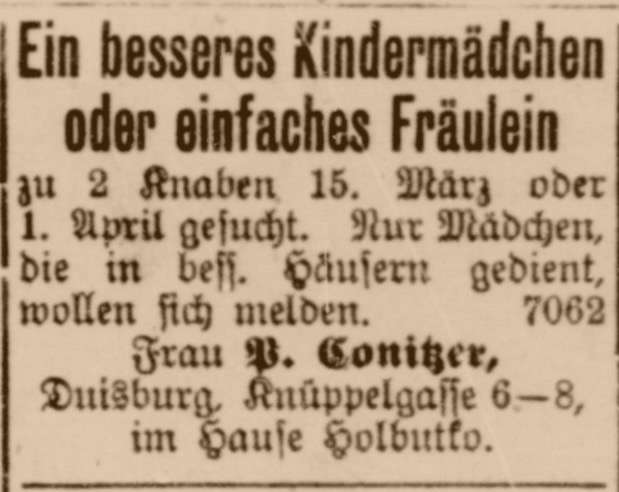
Figure 6: Advertisement for Mrs. P. Conitzer, see
“A superior nanny or simple young lady for 2 boys sought for March 15 or April 1. Only girls who have served in better houses should apply. Mrs. P. Conitzer, Duisburg, Küppelgasse 6—8, in the Holbutko house.”
Source: See
My daughter groans softly. “So exactly as expected!”. My answer is not convincing: “Basically you’re right, the reality at the beginning of the 20th century was complicated. Basically, there were two companies for Lina and Paul. One was the shop, where the salespeople, warehouse staff, and office workers worked, and then there was the household. They certainly had a large apartment with several domestic servants who looked after the children, cooked the food, cleaned the apartment, and did the laundry. So they had to share the tasks.” My daughter says: “True. But the man could just as well manage the apartment.”
Answering this statement is a difficult task. ‘That’s how it was back then’ is not a good answer at first. ‘The men didn’t feel like doing housework’ or alternatively: ‘were not trained for housework’, naturally provokes the answer: “The women weren’t either!” and “You can learn that!”.
“Paul and Lina decided on this division of labor back then. Today we do it differently,” is my answer. My daughter is only half convinced and adds: “I’ll definitely do it differently!”. In any case, Lina Conitzer was a very independent woman. It takes a continuation of the story to understand the greatness of this woman. I hope my daughter still has some attention left, and I can tell the rest of the story of Lina and Paul Conitzer and their department store in the next part.
Footnotes:
1 Cover image source: See . 2 §. 1354. The husband has the right of decision in all matters concerning the joint married life; he determines in particular the place of residence and the dwelling. The wife is not obliged to follow the husband’s decision if the decision represents an abuse of his right. See BGB
Sources: